
Decades of Perspective: What TiltFolio Balanced Teaches Us About the Future
 15 min read
Decades of Perspective: What TiltFolio Balanced Teaches Us About the Future
The Value of Long-Term Perspective
When it comes to investing, short-term results often dominate headlines. Markets crash, central banks intervene, assets rally, and investors are left scrambling to interpret what it all means for their portfolios. But step back, zoom out, and a different picture emerges.
For a simple buy-and-hold portfolio like TiltFolio Balanced, the real insights come not from one year or even one market cycle, but from decades of history. Looking across 50+ years, we see two key benefits:
• Forecasting through mean reversion: In the long run, performance tends to revert to its historical average. When a portfolio underperforms its long-term baseline, odds are high that the next chapter looks better, not worse.
This dual perspective (seeing both the mosaic of each decade and the gravitational pull of long-term averages) makes TiltFolio Balanced a powerful tool for investors who want clarity in uncertain times.
1970s: The Gold Decade
The 1970s marked the turbulent end of the gold standard and the arrival of inflation as the dominant economic theme.
| Performance | Value |
|---|---|
| Return | 12.5% / year |
| Volatility | 7.4% |
| Sharpe Ratio | 1.7 |
| Asset Class | Returns |
|---|---|
| Stocks | 6.1% / year |
| Bonds | 4.8% / year |
| Gold | 33.6% / year |
Inflation averaged 7.6% during the decade, erasing real returns from both stocks and bonds. Only gold held its ground, and then some. For TiltFolio Balanced, gold’s surge made the difference between mediocrity and outstanding performance.
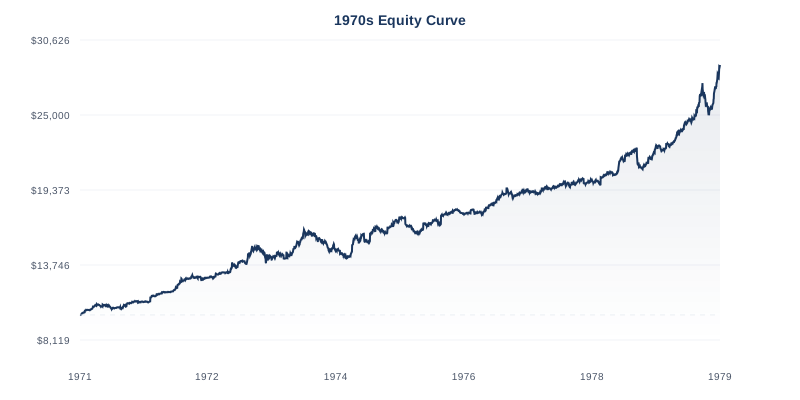
The lesson: when currencies weaken, diversification into hard assets is not optional, it’s essential.
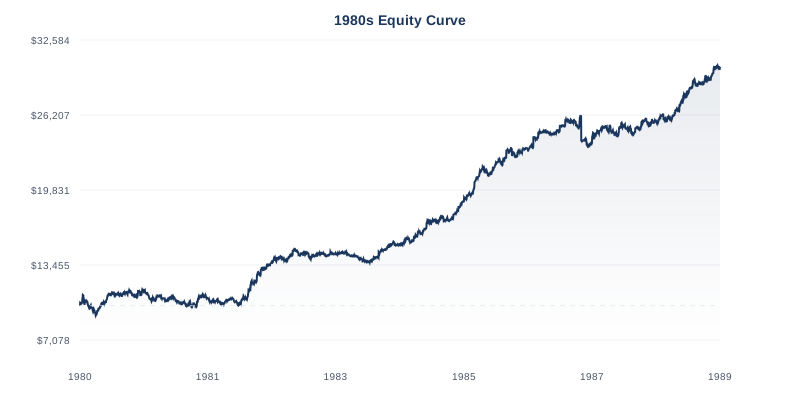
1980s: Bonds Join the Party
The 1980s brought a structural shift. Inflation collapsed after Paul Volcker’s rate hikes, while the bond bull market began its multi-decade march.
| Performance | Value |
|---|---|
| Return | 11.7% / year |
| Volatility | 9.1% |
| Sharpe Ratio | 1.3 |
| Asset Class | Returns |
|---|---|
| Stocks | 17.6% / year |
| Bonds | 13.5% / year |
| Gold | –3.2% / year |
Gold went from hero to zero, but stocks and bonds more than made up for it. The decade illustrates how a balanced portfolio doesn’t need all three assets firing at once. Two out of three is enough.
1990s: The Equity Boom
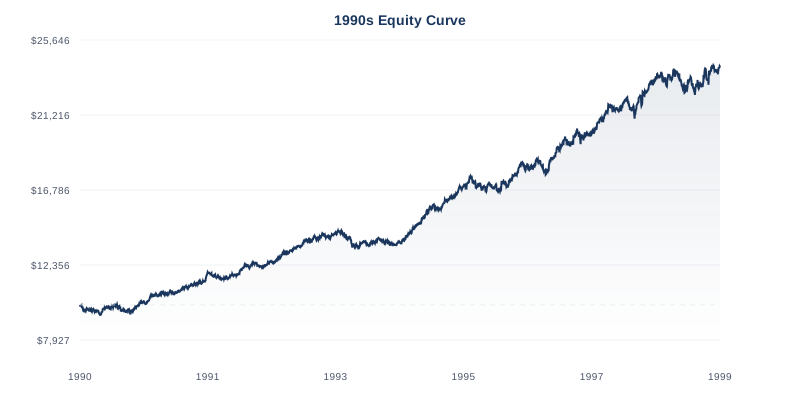
The 1990s were defined by globalization, technology, and the longest bull market in modern history.
| Performance | Value |
|---|---|
| Return | 9.2% / year |
| Volatility | 6.2% |
| Sharpe Ratio | 1.5 |
| Asset Class | Returns |
|---|---|
| Stocks | 18.0% / year |
| Bonds | 8.2% / year |
| Gold | –3.2% / year |
Equities carried the show, with bonds playing a quiet supporting role. Gold lagged, but diversification kept overall portfolio volatility low. This was a golden era for equities, and TiltFolio Balanced rode the wave without being overly dependent on them.
2000s: The Lost Decade for Stocks
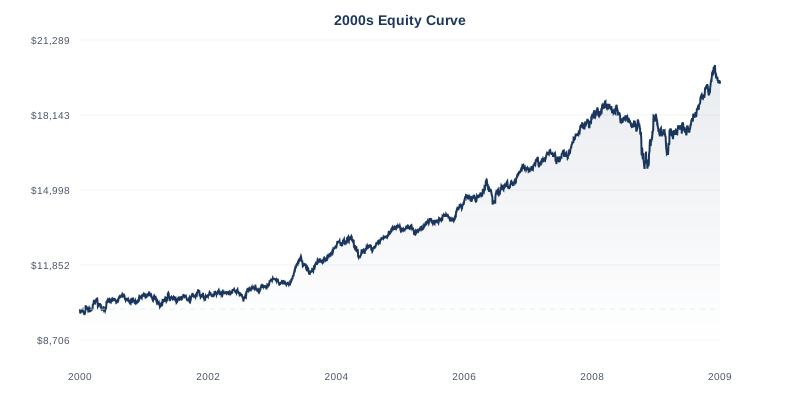
The dot-com bust, 9/11, and the global financial crisis made the 2000s a sobering period for equity investors.
| Performance | Value |
|---|---|
| Return | 6.9% / year |
| Volatility | 7.3% |
| Sharpe Ratio | 0.9 |
| Asset Class | Returns |
|---|---|
| Stocks | –0.9% / year |
| Bonds | 7.1% / year |
| Gold | 14.3% / year |
This was the decade when diversification paid off most visibly. Stocks delivered nothing. Bonds and gold, however, stepped up. Without them, investors relying solely on equities were left with flat or even negative returns. TiltFolio Balanced not only preserved capital but grew it steadily.
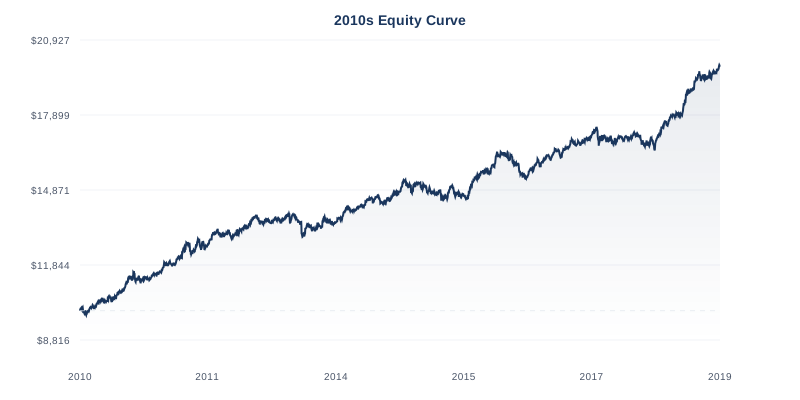
2010s: The Everything Rally
Following massive monetary intervention post-2008, both stocks and bonds soared.
| Performance | Value |
|---|---|
| Return | 7.1% / year |
| Volatility | 5.6% |
| Sharpe Ratio | 1.3 |
| Asset Class | Returns |
|---|---|
| Stocks | 13.4% / year |
| Bonds | 4.4% / year |
| Gold | 3.1% / year |
This decade reinforced the idea that balanced portfolios don’t need explosive gold returns to succeed. Even with gold as a modest contributor, TiltFolio Balanced delivered solid performance, with very low volatility.
2020s So Far: The Test
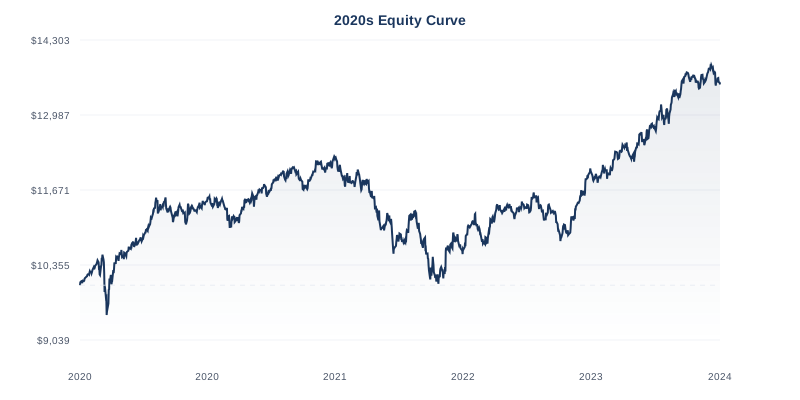
The 2020s opened with a pandemic, unprecedented stimulus, inflation’s return, and the worst bond market drawdown in history. Unsurprisingly, it’s been a rocky ride. The data below covers 2020-2024.
| Performance | Value |
|---|---|
| Return | 6.2% / year |
| Volatility | 8.6% |
| Sharpe Ratio | 0.7 |
| Asset Class | Returns |
|---|---|
| Stocks | 14.3% / year |
| Bonds | –1.6% / year |
| Gold | 11.6% / year |
Here, bonds were the drag. Despite stocks and gold doing well, the bond collapse weighed heavily. TiltFolio Balanced even touched its 200-week moving average for only the second time in history (the first being during the depths of 2008).
Why the Future Is Bright
If you judge TiltFolio Balanced by recent returns, you might conclude it’s losing steam. That would be a mistake.
The long-term averages tell a different story:
| 50+ Year Average | Value |
|---|---|
| Return | 9.2% / year |
| Volatility | 7.4% |
| Recent Performance | Value |
|---|---|
| Return | 6.2% / year |
| Volatility | 8.6% |
The gap is clear. Performance has lagged the historical trend. Volatility has been higher than usual. And history strongly suggests this imbalance will mean-revert.
Add to this the broader backdrop: after the extraordinary post-2008 monetary regime, many believe we’re entering a “golden age of macro.” A world where inflation, rates, and currencies matter again. A world where diversification regains its value.
And perhaps most importantly, the market leadership that has defined the past 15 years is already shifting. Since 2008, equities have been in a relentless bull market, carrying portfolios almost single-handedly. But that era may now be behind us. Bonds have already endured their worst drawdown in history and are set to normalize, offering meaningful returns once again. Meanwhile, gold has quietly begun to take the mantle from stocks, showing relative strength and building momentum as a new driver of portfolio performance.
TiltFolio Adaptive has already recognized this shift (it is now fully allocated to gold). That positioning, combined with TiltFolio Balanced’s long-term structure, suggests that the next leg higher will not look like the last one. Instead of equities dominating, the future is likely to be powered by bonds recovering and gold stepping into leadership.
This is exactly why the future is bright: TiltFolio is designed to adapt to shifts in market leadership, not cling to yesterday’s winners.
From History to Tomorrow
The past five decades show us one thing with certainty: no single asset class is reliable, but a thoughtfully balanced portfolio is.
• In the 1980s, bonds dominated.
• In the 1990s, equities led.
• In the 2000s, diversification saved the day.
• In the 2010s, everything worked.
• In the 2020s so far, bonds stumbled, but the stage is set for recovery.
And now, we stand at a turning point. The drivers of the past decade (U.S. equities and a 40-year bond bull) are giving way to a new mix. Bonds, after years of pain, have room to mean-revert higher. Gold, gaining relative strength against stocks, looks poised to step into a leadership role.
For investors, the conclusion is straightforward: recent underperformance is not a reason to give up, it’s a reason to lean in. With history as a guide and leadership shifting toward bonds and gold, the future for TiltFolio Balanced looks less like a struggle and more like an opportunity.
How TiltFolio Works Series
This post is part of the “How TiltFolio Works” series. Explore all posts in the series:
- TiltFolio Explained: A Smarter Alternative to 60/40 Portfolios
- Explaining TiltFolio Through Car Brands
- Why the Modern World Needs TiltFolio
- Why TiltFolio Balanced Is the Foundation
- The Ancient Origins of Portfolio Diversification
- TiltFolio Balanced as a Market Barometer
- When Simple Beats Sophisticated
- Decades of Perspective: What TiltFolio Balanced Teaches Us About the Future
- Building a Simple Trend-Following System
- Beyond Moving Averages: Why Volatility Trends Matter More Than You Think
- How TiltFolio Adaptive Differs From Traditional Trend-Following
- Will Trend-Following Keep Working?
- When Trend-Following Underperforms
- How to Avoid Curve-Fitting in Trend-Following
- The “Secret” to the Best Risk-Adjusted Returns: Correlations
- From Rollercoaster to Escalator: Finding Your Investing A-ha Moment
- TiltFolio’s Main Edge: Reliability That Compounds
- How to Stay Committed to an Investment Plan